Day: ?? . Time: ?? SGT
TBA
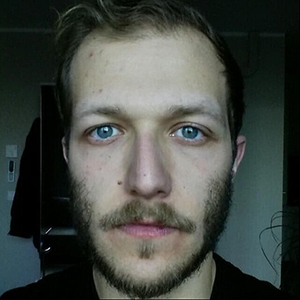
Dr. Edward PengHuazhong University of Science and Technology (HUST)
More talks to come. Reviewed by a peer-review board of practising researchers. Click any talk for details — share the link with a colleague.



Apple's Trusted Execution Monitor (TXM) is one of the most security-critical components of the modern iOS and macOS architecture: running alongside SPTM at a privilege level above XNU, it is the arbiter of code-signing and trust decisions for the entire system. It is also small, closed, undocumented, and painful to analyze — exactly the kind of target where a single researcher's time doesn't scale.
This talk is about changing that ratio by wiring large language models directly into a vulnerability-research pipeline. We begin with binary diffing across firmware releases to find what changed and where to look, then progressively hand more of the loop to the machine. We rehost TXM in userland so it can be executed and instrumented off-device, and let an AI agent write the fuzzing harnesses that drive it. From there we move TXM into a hypervisor-backed environment for higher-fidelity execution, and finally let the agent decompile TXM and hunt for vulnerabilities directly in the reconstructed code.
Along the way we'll be honest about what works, what breaks, where the AI confidently lies to you, and where it genuinely outperforms a human reviewer — leaving attendees with a realistic picture of agentic vulnerability research against a hard, real-world target, and a blueprint for pointing the same techniques at their own.
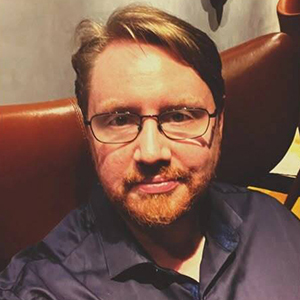
Stefan Esser is a security researcher at Calif focused on Apple platform internals. He is best known for early work on PHP security, including Hardened-PHP and Suhosin, as well as vulnerability research across a wide range of software. Over the last decade his work has centered on iOS and macOS, with a focus on kernel and Apple Silicon security architecture. He co-authored the iOS Hacker's Handbook and regularly speaks internationally about Apple security research and reverse engineering. For over a decade he has also run intensive training courses on iOS and macOS security for security professionals.