09:35 - 10:20
A Year of Hacking with LLMs: A Practitioner's Reflections
Dr. Edward PengHuazhong University of Science and Technology (HUST)

Reviewed by a peer-review board of practising researchers. Click any talk for details — share the link with a colleague.

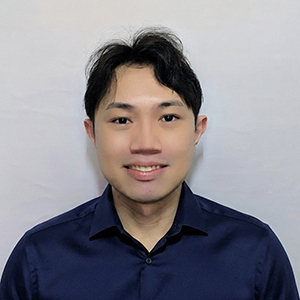
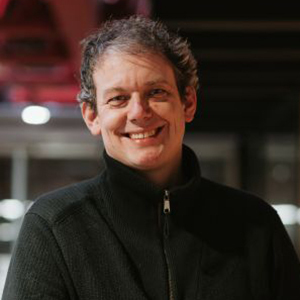





The introduction of the V8 Sandbox in Google Chrome has significantly raised the bar for browser exploitation. By design, it assumes attackers have already achieved arbitrary read/write capabilities within the V8 heap, establishing a hard boundary that makes it exceedingly difficult to escalate from heap control to full 64-bit process control. This effectively forces attackers to chain at least two distinct vulnerabilities. Against this defense, traditional coverage-guided fuzzers are severely handicapped. Lacking deep semantic awareness, they consistently bounce off the Sandbox's strict type-tagging and internal memory constraints, unable to trigger the complex C++ state-machine inconsistencies required for a true bypass. Discovering these vulnerabilities heavily relies on human security experts spending extensive time on manual code auditing.
This presentation introduces a multi-agent LLM pipeline engineered specifically to mine for semantic logic flaws in massive C++ engines. To mitigate the cognitive overload and severe hallucinations that plague single-agent LLM approaches when navigating V8's massive, macro-heavy codebase, we decouple the AI's "brain" into a specialized three-stage workflow. The system orchestrates "The Scout" for structural context and vulnerability pattern routing, "The Sniper" for deep, sandbox-aware taint tracking and exploit construction, and "The Judge" for adversarial cross-validation to heavily filter false positives.
By deploying this multi-agent pipeline against the V8 engine, we successfully uncovered 13 previously unknown sandbox bypasses, 5 of which achieve arbitrary address write or PC control. Notably, the framework excels at semantic variant hunting, successfully discovering deeply hidden variants of historically known vulnerabilities that had evaded both rigorous manual audits and continuous fuzzing campaigns. In this talk, we will dissect how the AI successfully reasoned through vulnerabilities that modern fuzzers simply cannot reach. Attendees will leave with a deep understanding of V8's underlying sandbox attack surface and the blueprint for applying LLMs to large-scale, automated semantic vulnerability discovery.
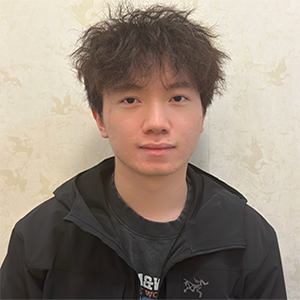
Picasso is a security researcher at Dawn Security Lab, JD.com. He focuses on vulnerability discovery in browsers and has found several high-quality vulnerabilities in the V8 engine. He has also participated in the research and development of AI agent systems for vulnerability discovery.

HaoHao Chen is a security researcher at JD Security Lab, specializing in binary security and vulnerability research. His work focuses on operating systems and web browsers. He has discovered multiple security vulnerabilities in critical software infrastructure, including the Linux kernel, NGINX, and the V8 JavaScript engine. He is also a member of the Google Chrome VRP.
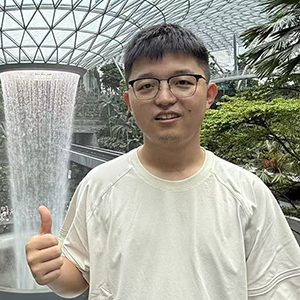
Hongze Shang is the Director of Dawn Security Lab at JD.com. His previous work spans vulnerability research, mobile security, and digital risk intelligence. He was also a speaker at Off-By-One 2025.
Yinyi Wu (a.k.a. 3ndy1) is a security researcher at Dawn Security Lab, JD.com. He focuses on mobile operating system security and has repeatedly uncovered high-severity vulnerabilities in Apple operating systems. He is also a former Black Hat speaker.