Day: ?? . Time: ?? SGT
A Year of Hacking with LLMs: A Practitioner's Reflections
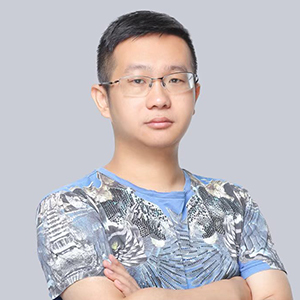
Dr. Edward PengHuazhong University of Science and Technology (HUST)
More talks to come. Reviewed by a peer-review board of practising researchers. Click any talk for details — share the link with a colleague.







As Android devices increasingly rely on dedicated AI acceleration hardware, the software layers around these components are becoming an important part of the mobile attack surface. During my master’s thesis research at NUS, I discovered CVE-2026-57016, a privilege escalation vulnerability in the Google Pixel EdgeTPU AI accelerator driver. Since LLMs are trained on previously collected data, this research also asks a practical question: how well can AI assistance perform on a relatively unexplored attack surface such as the Pixel TPU?
This talk walks through the research process from attack surface mapping to exploitability validation: understanding how the EdgeTPU kernel driver is used across userland, kernel, and firmware, identifying the bug, writing a proof of concept, and validating the impact by achieving root.
Along the way, I will examine where AI assistance was actually useful and where it fell short. I will explain how AI helped with traditional support tasks such as code comprehension, reverse engineering, debugging, and workflow acceleration, but struggled with hypothesis generation, out-of-the-box reasoning, and the security intuition needed to determine whether a driver bug can become reachable privilege escalation.
Kang Yu is an independent researcher with a background in software engineering. He began pursuing research while completing a part-time cybersecurity master’s degree and has since continued developing his work independently. At this conference, he will present his research and share insights from his research journey.